Why do capitalistic and centrally planned economic societies tend to have a greater effect on the environment then subsistence economies?

  1. Why do capitalistic and centrally planned economic societies tend to have a greater effect on the environment then subsistence economies?
  2. How can consumer choices of more environmentally responsible products make companies change their practices?
  3. Name three options that you have when you grocery shop that would encourage more environmentally responsible actions on the part of companies.
  4. Do you opt for the choices that you outlined in question six? Why or why not? Be specific.
  5. What two factors greatly affect the overall resource use by humans?
  6. How might developed countries decrease per capita resource use?
  7. Name and describe three things that you can do today to decrease your personal resource use.
  8. How did the industrial revolution enable humans to increase their carrying capacity?
  9. The preservation of the planet is a universal problem that affects all citizens of the earth. Do you think that more wealthy nations have a responsibility to offset issues of environmental degradation at a higher rate than non-wealthy nations? Why or why not? Be specific.
  10. Describe the ecological footprint of a person? What does population growth and population density tell you about the overall affect that a population will have on the planet once you know their average ecological footprint?
  11. What is genetic engineering? Name one way in which it increases crop yield. Why are some scientists concerned about its application in human food production?
  12. What are the possible effects of nutrients leaching into water systems?
  13. Why is it important to manage soils in agricultural systems?
  14. Why does it take so much more energy to raise meat than it does to raise plants for food?
  15. Why does buying organic and local produce move agriculture towards sustainability?


How would you prefer the universe as we know it to  end, in a “Big Crunch” or through eternal expansion?

Online Discussion assignments for this course will consist of  multiple questions/topics presented via a forum created for each module.  You must create a post of at least 200-words in answer to ONE of the week’s Discussion questions/topics.

Be sure to identify the title of the question when posting.

  1. Our Fate:   Scientists, philosophers, and poets alike have speculated on the fate  of the universe. How would you prefer the universe as we know it to  end, in a “Big Crunch” or through eternal expansion? Explain the reasons  behind your preference.
  2. Dark Matter or Revised Gravity:  One possible explanation for the evidence we find for dark matter is  that we are currently using the wrong law of gravity to measure the  masses of very large objects. If we really do misunderstand gravity,  then many fundamental theories of physics, including Einstein’s theory  of general relativity, will need to be revised. Which explanation for  our observations do you find more appealing: dark matter or revised  gravity? Explain why. Why do you suppose most astronomers find dark  matter more appealing?
  3. The Case for Supermassive Black Holes:  The evidence for supermassive black holes at the center of galaxies  is strong. however, it is very difficult to prove absolutely that they  exist because the black holes themselves emit no light. We can only  infer their existence from their powerful gravitational influences on  surrounding matter. How compelling is the evidence? Do you think  astronomers have proved the case for black holes beyond a reasonable  doubt? Defend your opinion.
  4. Cosmology and Philosophy:  One hundred years ago, many scientists believed that the universe was  infinite and eternal, with no beginning and no end. When Einstein first  developed his general theory of relativity, he found that it predicted  that the universe should be either expanding or contacting. He believed  so strongly in an eternal and unchanging universe that he modified his  theory, a modification he would call his “greatest blunder.” Why do you  think Einstein and others assumed that the universe had no beginning? Do  you think that a universe with a definite beginning in time, some 14  billion or so years ago, has any important philosophical implications?  Explain.

How do the meninges and cerebrospinal fluid (CSF) function together in a healthy nervous system; what are their roles?

Nervous System Lab – Week Seven

Introduction

The nervous system has two components: the central nervous system, which consists of the brain and spinal chord; and the peripheral nervous system, which is composed of nerves. As you learn about the various diseases that affect the nervous system, it is important for you to understand the structures that can be affected by disease. Complete this lab to become familiar with a healthy system and to identify diseases related to the brain, spinal chord, and nerves.

PART ONE: basic functions

Provide brief answers to the following questions to help you get acquainted with the basic functions of a healthy nervous system. Refer to Ch. 24 in Microbiology: Principles and Explorations.


1.     How do the meninges and cerebrospinal fluid (CSF) function together in a healthy nervous system; what are their roles?

2.     What is the blood-brain barrier?

3.     What normal microflora reside in the nervous system?

PART two: basic structures

Visit Chapter 24 of Microbiology: Principles and Explorations in WileyPlusto view an in-depth presentation of a healthy nervous system by completing the following steps:


·      Select the Chapter 24 WileyPlus reading link located on your student Web page.

·      Locate the heading Chapter Review.

·      Select the Anatomy Overview: The Nervous System link.

·      Complete this lab as you explore the Nervous System multimedia piece.


Nervous System: The Brain


Roll over each component of the Nervous System multimedia piece. Click on the brain. Refer to the Braincomponent of the multimedia piece to label the structures in the following diagram of a healthy brain.


Nervous System: The Spinal Cord


Click the icon in the upper left corner of the Brain diagram to return to the main menu in the Nervous System multimedia piece. Click the Spinal Cord component to navigate to the Spinal Corddiagram. Refer to the Spinal Corddiagram of the multimedia piece to label the following structures of a healthy spinal cord.


PART three: investigate and apply

Several different pathogenic bacteria can cause bacterial meningitis, an infection and inflammation of the meninges. Select any form of bacterial meningitis discussed in Ch. 24 of Microbiology: Principles and Explorations, and answer the following:


1.     Which form of bacterial meningitis did you select and what is its causal agent?

2.     What symptoms are typical of this form of meningitis?

3.      Which age group or population is most susceptible to this form of meningitis and do typical activities within that age group have any influence on a person contracting the disease?


©2008 University of Phoenix. All rights reserved.


SCI250 Week 7 Chapter 24 Nervous System Quiz – 5 points (Please underline, highlight and or check the most appropriate answer)


Section: Multiple Choice


1.     Which of the following is associated with serious infection of the meninges?

  • Clogging of blood vessels
  • Increased pressure within the skull
  • Decreased cerebrospinal fluid flow
  • Impaired central nervous system function
  • All of the above

2.     Which of the following is a common cause of meningitis in non-immunized young children?

  • Streptococcus pneumoniae
  • Escherichia coli
  • Staphylococcus
  • Haemophilus influenzae
  • None of the above

3.     A complication of infection with this organism (Waterhouse-Friderichsen syndrome) can occur if the organism becomes widely distributed in the body, leading to endotoxin shock and death. What is this organism?

  • Haemophilus influenzae
  • Neisseria meningitidis
  • Haemophilus influenza
  • Streptococcus pneumoniae
  • Listeria monocytogenes

4.     What is the microorganism that causes most cases of meningitis among adults?

  • Haemophilus influenzae
  • Neisseria meningitidis
  • Haemophilus influenzae
  • Listeria monocytogenes
  • Streptococcus pneumoniae

5.     Which of the following bacteria that may cause meningitis is Gram positive and therefore does not cause endotoxin shock in infected individuals?

  • Escherichia coli
  • Neisseria meningitidis
  • Listeria monocytogenes
  • Haemophilus influenzae
  • None of the above

6.     Meningitis caused by Listeria monocytogenes is usually transmited by ________

  • food.
  • water.
  • aerosols.
  • sexual contact.
  • physical contact.

7.     What causes Hansen’s disease (leprosy)?

  • Mycobacterium tuberculosis
  • Mycobacterium leprae
  • Listeria monocytogenes
  • Clostridium botulinum
  • Prions

8.     An immunofluorescent antibody test (IFAT) has replaced the older test for the presence of inclusions in neurons (Negri bodies) for the detection of infections caused by ________

  • Neisseria meningitides.
  • Enteroviruses.
  • Mumps virus.
  • Rabies virus.
  • Haemophilus influenzae.

9.     What viruses most likely cause encephalitis?

  • Togaviruses
  • Enteroviruses
  • Mumps virus
  • Rabies virus
  • Hepatitis viruses

10.  Muscle spasms that can lead to an arched back and spasms of the jaw muscles (lockjaw) can be caused by infections with ________

  • Clostridium tetani.
  • Clostridium botulinum.
  • Mycobacterium leprae.
  • Mycobacterium tuberculosis.
  • Poliovirus.

11.  What is the most common form of disease caused by Clostridium botulinum?

  • Infant
  • Wound
  • Lung, followed by exposure to aerosols
  • Foodborne
  • None of the above

12.  Preventing African sleeping sickness is nearly impossible because ________

  • the trypanosomes change their surface glycoproteins evading the host immune response.
  • the tsetse fly has a wide range and eradication is difficult.
  • vaccines must target many antigens.
  • All of the above

13.  Poliovirus infections may cause no symptoms and go undetected in ________

  • small children.
  • teenagers.
  • young adults.
  • elderly.
  • All of the above

14.  Which form of poliovirus vaccine is better at eliminating viruses in the gastrointestinal tract?

  • Live attenuated vaccine
  • Formalin-killed vaccine

Section: Matching


15.  Shrinkage and lysis of neurons of the central nervous system; headache, fever, and sometimes brain necrosis and convulsions

  • Bacterial meningitis
  • Listeriosis
  • Rabies
  • Encephalitis
  • Hansen’s disease
  • Tetanus
  • Botulism
  • Poliomyelitis
  • Transmissable spongiform encephalopathies
  • Chagas’ disease

16.  Range of symptoms from loss of skin pigment and sensation to lepromas and erosion of skin and bone

  • Bacterial meningitis
  • Listeriosis
  • Rabies
  • Encephalitis
  • Hansen’s disease
  • Tetanus
  • Botulism
  • Poliomyelitis
  • Transmissable spongiform encephalopathies
  • Chagas’ disease

17.  Toxin-mediated disease; muscle stiffness, spasms, paralysis of respiratory muscles, heart damage, and usually death

  • Bacterial meningitis
  • Listeriosis
  • Rabies
  • Encephalitis
  • Hansen’s disease
  • Tetanus
  • Botulism
  • Pioliomyelitis
  • Transmissable spongiform encephalopathies
  • Chagas’ disease

18.  Fever, back pain, muscle spasms, partial or complete flaccid paralysis from destruction of motor neurons

  • Bacterial meningitis
  • Listeriosis
  • Rabies
  • Encephalitis
  • Hansen’s disease
  • Tetanus
  • Botulism
  • Poliomyelitis
  • Transmissable spongiform encephalopathies
  • Chagas’ disease

19.  Death of brain cells leave holes, creating spongiform brain tissue; amyloid plaques form; long delay before symptoms appear; then spasms rapidly worsening to collapse; no cure

  • Bacterial meningitis
  • Listeriosis
  • Rabies
  • Encephalitis
  • Hansen’s disease
  • Tetanus
  • Botulism
  • Poliomyelitis
  • Transmissable spongiform encephalopathies
  • Chagas’ disease

20.  Subcutaneous inflammation, damage to lymphatic tissues, muscle, and nerve ganglia; muscle pain and paralysis of intestinal, heart, and skeletal muscle

  • Bacterial meningitis
  • Listeriosis
  • Rabies
  • Encephalitis
  • Hansen’s disease
  • Tetanus
  • Botulism
  • Poliomyelitis
  • Transmissable spongiform encephalopathies
  • Chagas’ disease

Top of Form

[removed]

Bottom of Form


. Look at your diagrams for hydrogen, lithium, and sodium. What do they all have in common? What group are these elements in on the periodic table?

Atomic models are useful because they allow us to picture what is inside of an atom, something we will never be able to actually see. We’re going to talk about two models, the Bohr model and the Quantum model. While we know that the Quantum model is the correct way to represent atoms, the Bohr model is still useful for a very basic understanding. Think of it as a stick figure sketch of an atom. The parts are all there, its just not quite filled in all of the way.
Bohr Model
The Bohr model of the atom was developed in 1914 by Niels Bohr. In this model, electrons move around the nucleus in fixed, concentric circles. Picture the planets orbiting the Sun. These circles are called energy levels and electrons must have a specific amount of energy to be in each level. The energy levels closest to the nucleus require the least amount of energy. In order for an electron to move further from the nucleus (or move up an energy level) they must gain energy. If they lose energy they fall down to an energy level closer to the nucleus.
Drawing the Bohr model for an atom gives you valuable information about the atom’s valence electrons. The valence electrons–those in the outermost energy level–are the ones that determine the chemical properties of an atom. In order to draw a Bohr model you must first use the periodic table to tell you the number of protons, neutrons, and electrons in an atom. For Bohr models we usually draw what the “average” atom for that element looks like and just round the average atomic mass to a whole number and use that for the mass number.
Steps for Drawing a Bohr Model:
1. Count the number of protons, electrons, and neutrons for that atom.
2. Draw the nucleus. Indicate the correct number of protons and neutrons in the nucleus.
3. Draw energy levels around the nucleus, starting with the energy level closest to the nucleus. Fill up each energy level before moving on to the next.
Each energy level in a Bohr model can only hold a specific number of electrons, as shown in the table below.
 Energy Level  Max # of electrons
 1  2
 2  8
 3 18
 4 32
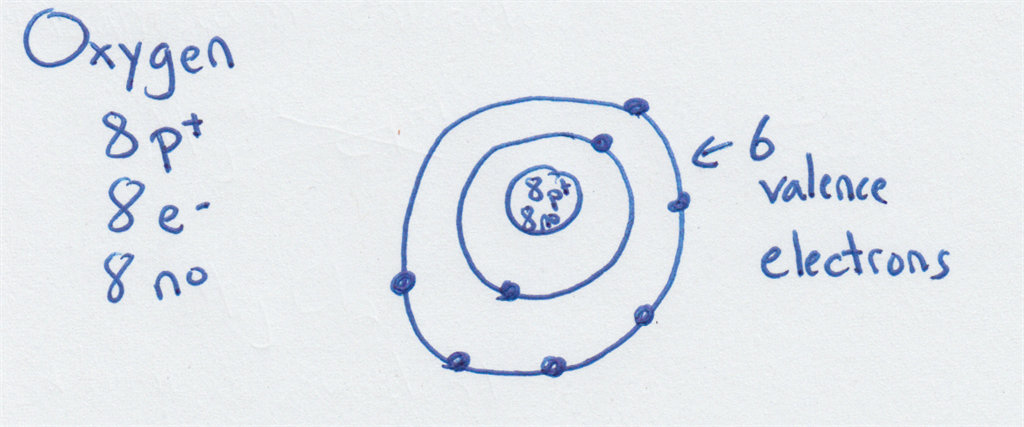
For example, here is a Bohr model for the average oxygen atom:
 
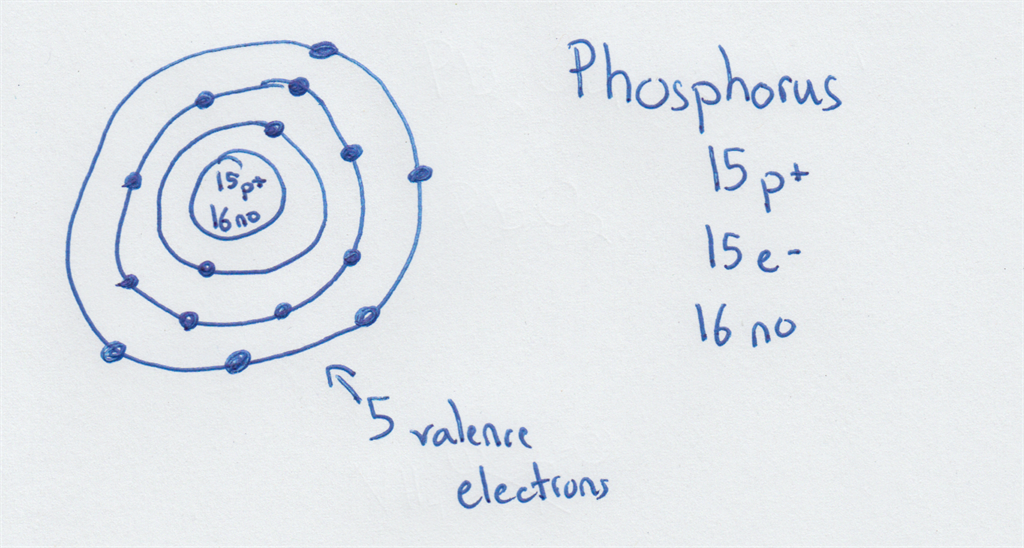
Here is one for phosphorus:
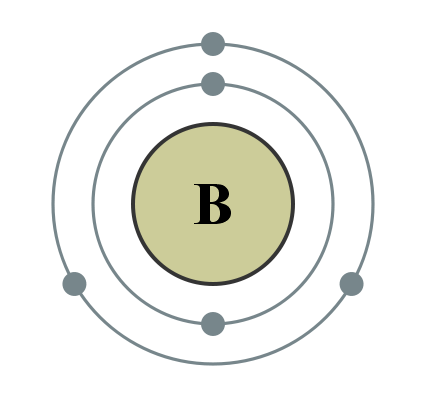
You try drawing one for Magnesium (Mg) and for Boron (B). Count the number of electrons on the outermost energy level to find the number of valence electrons. Check your answers by looking at the handout.
Quantum Model
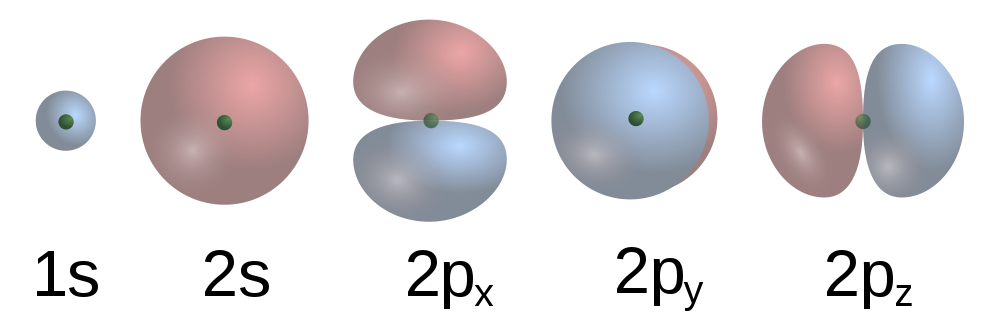
In 1925 the Quantum model of the atom was developed after it was determined that electrons can behave like a wave and a particle at the same time. In addition, you can’t know the precise location of an electron. Instead of traveling in orderly circles around the nucleus, we describe the electrons as existing in a three-dimensional electron cloud–a shape surrounding the nucleus. You will learn more about the Quantum model in chemistry.
These are some of the orbital shapes possible in the first two energy levels of an atom.
Draw a Bohr model for elements with atomic numbers 1-18 (Hydrogen thru Argon). Draw each diagram neatly, clearly labeling the correct number of protons, electrons, and neutrons for each diagram. Use the average atomic mass from the periodic table for the mass number (round to the nearest whole number). These can be drawn by hand and scanned or photographed, or can be drawn electronically. Count and label the valence electrons (those in the outermost energy level) for each diagram. Upload your diagrams and the answers to the two questions below here.
Questions:
1. Look at your diagrams for hydrogen, lithium, and sodium. What do they all have in common? What group are these elements in on the periodic table?
2. Look at your diagrams for fluorine and chlorine. What do they have in common?